Gluten Explained: Who Really Needs a Gluten-Free Diet?
Gluten-free products are everywhere, but who actually needs to avoid gluten? Learn the science behind celiac disease, gluten sensitivity, and wheat allergy


Walk down any grocery aisle today and you’ll see “gluten-free” stamped on everything from bread to bottled water. It’s easy to come away thinking gluten is something everyone should avoid. But the truth is more specific: only a small percentage of people actually need to cut gluten from their diet for medical reasons.
So what is gluten, exactly, and who really needs to steer clear of it? This guide breaks down the science — what gluten does in food, the medical conditions that require a gluten-free diet, and how to figure out whether you’re one of the people who actually needs to make a change.
What Exactly Is Gluten?
Gluten is a family of proteins found mainly in wheat, barley, and rye. It’s what gives dough its stretchy, elastic texture and helps bread rise and hold its shape. Without gluten, baked goods would crumble apart instead of forming that familiar chewy structure.
You’ll find gluten in a wide range of everyday foods, including:
Bread, rolls, and bagels
Pasta and noodles
Cereals and granola
Beer
Many processed and packaged foods, sauces, and gravies (often as a thickener or hidden ingredient)
One common point of confusion: oats. Pure oats are naturally gluten-free, but they’re frequently processed in facilities that also handle wheat, leading to cross-contamination. Certified gluten-free oats, which are processed to avoid this contamination, are generally safe for most people who need to follow a gluten-free diet.
Who Actually Needs to Avoid Gluten?
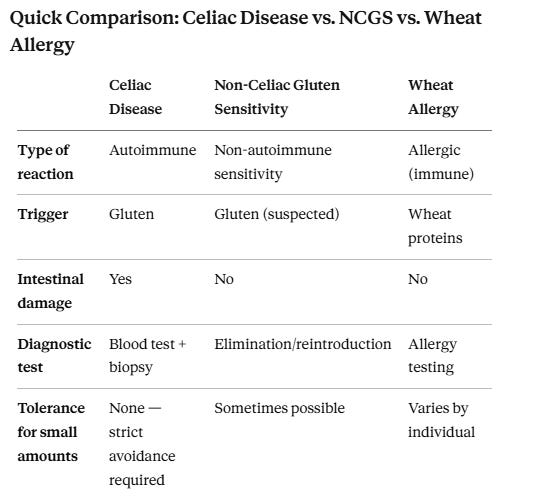
Medical avoidance of gluten generally falls into three categories: celiac disease, non-celiac gluten sensitivity, and wheat allergy. Each is a distinct condition with its own causes, symptoms, and treatment path.
Celiac Disease
Celiac disease is an autoimmune disorder triggered by eating gluten. When someone with celiac disease consumes gluten, their immune system mistakenly attacks the lining of the small intestine. Over time, this damages the intestinal wall, impairs nutrient absorption, and can lead to serious long-term health complications if left untreated.
Common symptoms include:
Digestive issues (bloating, diarrhea, constipation)
Chronic fatigue
Anemia
Skin rashes (specifically a condition called dermatitis herpetiformis)
Headaches
Notably, some people with celiac disease have few or no obvious symptoms at all, which is part of why the condition often goes undiagnosed for years.
Diagnosis requires blood tests followed by an intestinal biopsy to confirm damage to the small intestine. This is important: starting a gluten-free diet before testing can interfere with results and make an accurate diagnosis much harder.
Treatment is straightforward but demanding — a strict, lifelong gluten-free diet is currently the only effective way to manage celiac disease. There’s no medication that allows someone with celiac disease to eat gluten safely.
Non-Celiac Gluten Sensitivity (NCGS)
Some people experience real, uncomfortable symptoms after eating gluten but test negative for both celiac disease and wheat allergy. This is known as non-celiac gluten sensitivity.
Common symptoms include:
Bloating and abdominal pain
Fatigue
Brain fog
Headaches
Unlike celiac disease, there’s currently no specific blood test for NCGS. Diagnosis typically involves an elimination and reintroduction process under medical supervision — removing gluten, monitoring symptoms, then reintroducing it to see if symptoms return.
Management usually involves a gluten-free diet, though some people with NCGS find they can tolerate small amounts without issue, which is a key difference from celiac disease’s zero-tolerance requirement.
Wheat Allergy
A wheat allergy is different from both celiac disease and gluten sensitivity — it’s an allergic immune reaction to proteins found in wheat, not specifically to gluten itself.
Symptoms can range from mild to severe, including hives, swelling, digestive upset, breathing difficulty, or in serious cases, anaphylaxis.
Treatment means avoiding wheat entirely, and sometimes other related grains depending on the individual’s specific triggers. It’s worth noting that gluten-free products made from non-wheat sources may still be safe for someone with a wheat allergy, but this isn’t guaranteed — always check labels and consult an allergist.
Other Related Conditions
A few less common conditions are also tied to gluten:
Dermatitis herpetiformis — an itchy, blistering skin condition that’s actually a skin manifestation of celiac disease
Gluten ataxia — a rare neurological condition affecting coordination and balance, linked to gluten exposure in some individuals
Who Does Not Need to Avoid Gluten?
Here’s the key takeaway: the large majority of people have no medical reason to avoid gluten. If you don’t have celiac disease, NCGS, or a wheat allergy, there’s no proven health benefit to cutting gluten from your diet.
In fact, unnecessary gluten-free diets can come with real downsides:
Higher grocery costs — gluten-free specialty products are often more expensive
Lower fiber and nutrient intake — many gluten-free processed foods are lower in fiber, iron, and B vitamins than their wheat-based counterparts
Unnecessary restriction of healthy whole grains like whole wheat, barley, and rye, which offer valuable nutrients and fiber
So why do so many people report feeling better after going gluten-free? Often, it’s not the absence of gluten itself — it’s that cutting gluten naturally means cutting back on ultra-processed foods (think white bread, pastries, and packaged snacks) and eating more whole, minimally processed foods instead. The improvement comes from an overall better diet, not gluten avoidance specifically.
How to Know If You Should Avoid Gluten
If you suspect gluten might be affecting your health, don’t just start eliminating it on your own. Here’s the right approach:
Talk to a doctor if you’re experiencing persistent digestive issues, fatigue, or other unexplained symptoms.
Get tested for celiac disease before making any dietary changes — this is critical, since going gluten-free first can produce a false-negative result.
Consider working with a registered dietitian who has experience with gluten-related disorders to guide you through elimination diets or long-term management safely.
Self-diagnosing and cutting gluten without testing might feel proactive, but it can actually make it harder for doctors to accurately diagnose celiac disease or NCGS down the road.
Key Takeaways
Gluten is a protein found in wheat, barley, and rye that gives dough its elastic texture.
Only people with specific medical conditions — mainly celiac disease, non-celiac gluten sensitivity, or wheat allergy — need to avoid it.
Most people can eat gluten without any health issues.
Get properly tested before eliminating gluten, since self-diagnosis can complicate accurate testing later.
Always consult a doctor or registered dietitian before making major dietary changes.
Conclusion
Understanding what gluten actually is — and who genuinely needs to avoid it — helps you make informed decisions instead of following the latest food trend. If you suspect gluten might be causing you problems, the best next step isn’t to quietly cut it from your diet; it’s to get tested and talk to a professional. That way, you get a real answer instead of a guess. Knowledge like this puts you back in control, so you can eat in a way that actually supports your health, rather than reacting to marketing on a food label.
This article is for informational purposes only and is not a substitute for professional medical advice. If you have symptoms that concern you, consult a doctor before making changes to your diet.